Yesterday, I took a tour of a wetland at the Agassiz Research and Development Centre.
Built primarily to make the surrounding farmland more productive, the wetland had started as a simple clay-lined pond. But over the last three years, it has evolved into a thriving ecological hot-spot, hosting native frogs, a variety of dragonflies, eager swallows, and many, many slugs.
It’s an example that simple things can really make a difference to endangered species in our communities. We don’t have to make some grand gesture to save an entire habitat, although that’s good too. We can just take a simple step in our own backyard to make our environment a little better than it was before.
My upcoming book, Canada’s Endangered Animals, outlines some of the ways kids (and adults) can help endangered species in their community.
One year from today, assuming everything goes according to plan, my book on Canada’s endangered animals will be released to the public, and it will include a whole list of different ways kids and adults can help endangered species in their community. But I won’t make you wait a whole year for some of the tips and tricks, because we shouldn’t wait to make a difference in our communities.
Something as simple as pulling weeds by hand rather than using weed killer can make a huge difference to the health of our environment, even if it’s a pain for our backs. We can also try something a little more complex, and build a bat box for the backyard or participate in a citizen science initiative.
One other way to help, not mentioned in my book, is giving your support to an existing organization doing important work to help endangered animals in Canada.
Below are a selection of those groups, each connected to at least one of the animals I feature in my book.
Nature Conservancy Canada engages in a variety of conservation efforts, including creating artificial roosts for bats in BC, creating new wetlands in Ontario, and protecting habitat for whooping cranes, ivory gulls, and other animals across Canada. Their website includes different ways people can help protect endangered animals, including donating money and volunteering at different events.
Nature Canada, separate from Nature Conservancy Canada, focuses on public outreach in its efforts to protect endangered animals. Their work prioritizes animals at risk, including the Ord’s kangaroo rat, the whooping crane, the Vancouver Island marmot, and the Gaspésie Caribou. They are working on a NatureHood program to get more kids connected with nature. You can help by donating money and participating in their advocacy work.
Focused on the animals that live in Ontario, Ontario Nature helps preserve biodiversity across the province. It has a unique Master Naturalist Program, hosts a Youth Summit for Mother Earth each fall, and undertakes concrete actions to save animals in Ontario. You can help by participating in events, engaging in their citizen science initiatives, or donating funds.
Vancouver Island Marmot Recovery Foundation
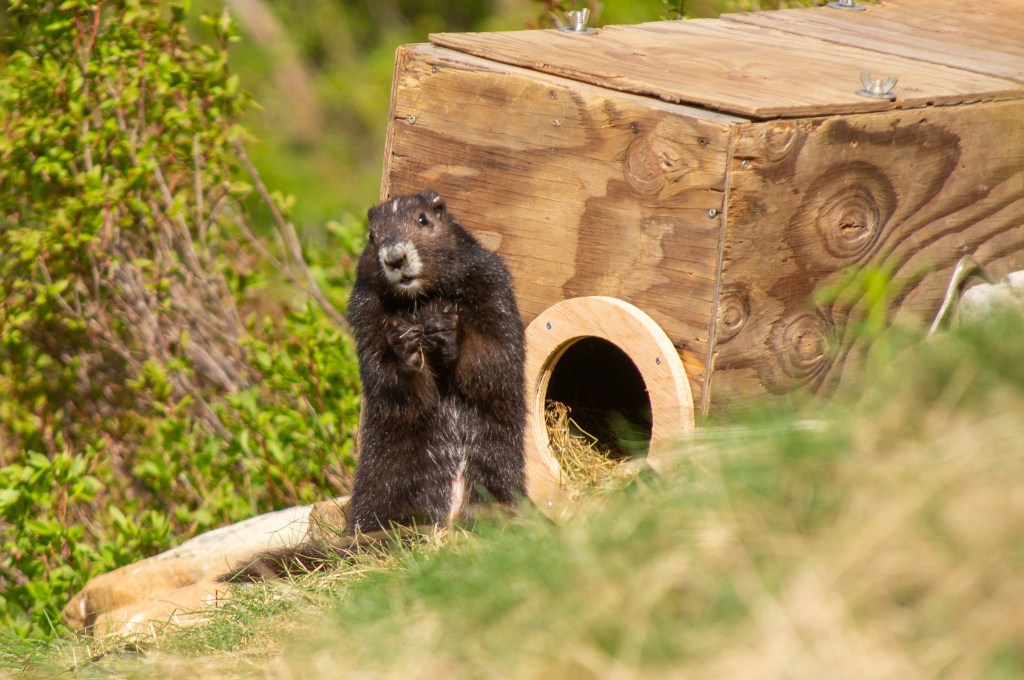
The Vancouver Island Marmot Recovery Foundation is focused solely on, you guessed it, the Vancouver Island Marmot. Their recovery efforts include raising baby marmots to be released into the wild and engaging in non-lethal predator control. You can help by “adopting” a marmot, volunteering on Vancouver Island with the foundation, donating money, and reporting any marmot sightings.
Located in the Fraser Valley, where I live, the Fraser Valley Conservancy focuses on the ecosystems and animals in that part of British Columbia. Their efforts include habitat protection, owl monitoring, and frog counting. You can help by donating money (of course), participating in their frog finder program, or planting native flowers in your yard.
*Local organizations, like the Fraser Valley Conservancy or the Vancouver Island Marmot Foundation, often have the most hands-on ways to help protection endangered animals in your area. If you don’t know one in your area, ask around! You’ll likely find some great ways to help the environment.


 Grace Kennedy
Leave a comment